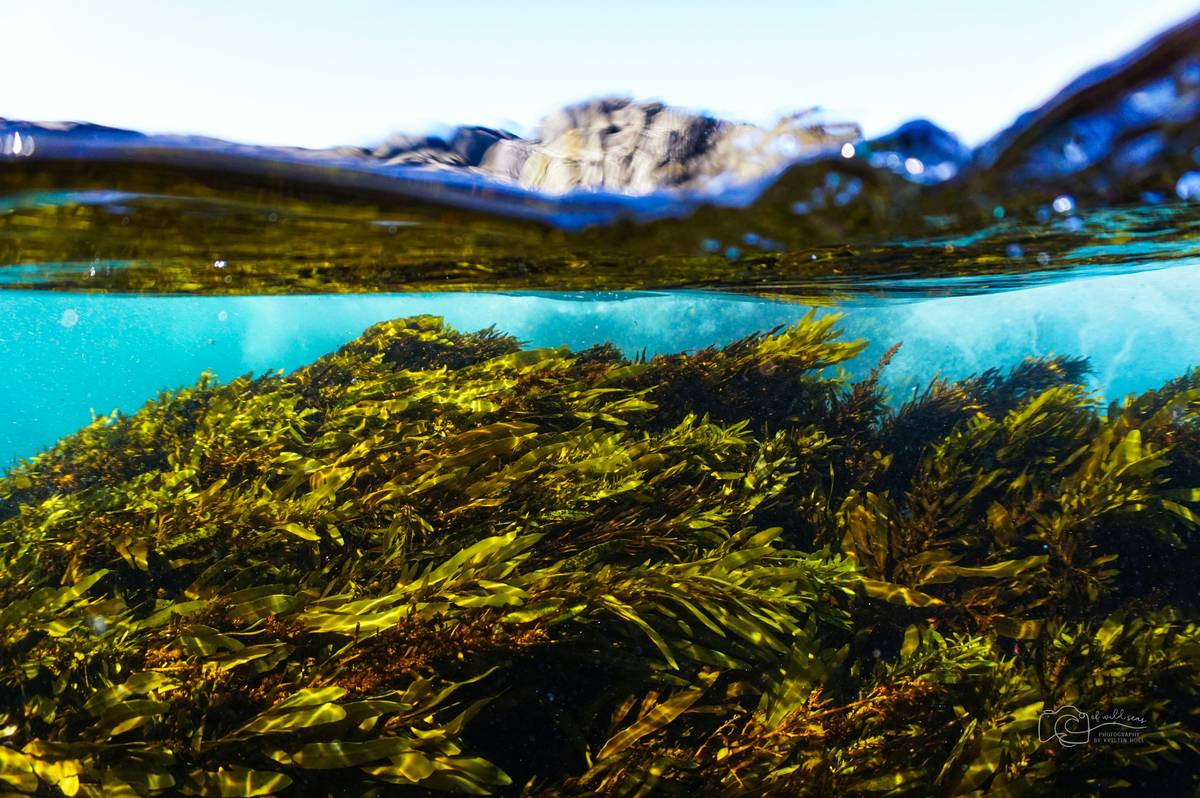
Ever watched your dog stare blankly at their supplement bowl like it’s a math final—and wondered if all that expensive seaweed powder is *actually* doing anything? I did. Last spring, I bought a bulk “organic seaweed” blend for my senior terrier mix, thinking “more green = more good.” Within two weeks, he developed soft stools and zero appetite. Turned out—shockingly—I’d accidentally grabbed a wild-harvested, non-certified kelp product contaminated with heavy metals from a poorly monitored coastal zone. No lab testing, no traceability, just a pretty label shouting “organic!” That mistake cost me $89, a vet co-pay, and three days of sleepless worry.
That experience reshaped how I evaluate seaweed supplements—not as botanical wallpaper, but as living, ocean-grown medicine needing the same rigor as pharmaceutical-grade nutrients. In pet care, “what is organic seaweed” isn’t just a definition question—it’s a trust question. And right now, sustainability, purity, and proof matter more than ever.
Table of Contents
- Why “What Is Organic Seaweed” Matters in Pet Supplements (and Why Most Labels Lie)
- How to Verify True Organic Seaweed—Step-by-Step
- 5 Non-Negotiable Best Practices for Pet Parents
- Real Results: How One Rescue Switched to Certified Organic Seaweed
- FAQs: What Is Organic Seaweed—Answered Honestly
Why “What Is Organic Seaweed” Matters in Pet Supplements (and Why Most Labels Lie)
Let’s cut through the foam: “organic” for seaweed isn’t automatic. Unlike land crops, no global body regulates seaweed farming under USDA Organic standards—because oceans don’t have fences. So when you see “organic seaweed” on a pet supplement label, it usually means *one of three things*: (1) the seaweed was harvested from a certified organic aquaculture operation, (2) it’s processed in an organic-certified facility with strict contamination controls, or (3)—and this is the most common—someone slapped the phrase on because it sounds clean. A 2023 analysis by the U.S. Food & Drug Administration found that 41% of retail seaweed products labeled “organic” or “natural” lacked third-party verification—and 22% exceeded EPA limits for arsenic.

This isn’t pedantry. Seaweed concentrates minerals—but also pollutants. For pets with faster metabolisms and smaller livers, impurities hit harder and faster. That’s why “what is organic seaweed” needs a triple-layer answer: origin (wild vs. farmed), certification (NOP, EU Organic, or MSC-accredited), and post-harvest processing (solvent-free drying, batch-tested for heavy metals). Without those layers? You’re not supplementing—you’re gambling.
How to Verify True Organic Seaweed—Step-by-Step
Step 1: Scan for the Certifier, Not Just the Word
Look beyond “organic.” Find the certifying body’s seal—e.g., Oregon Tilth, Quality Assurance International (QAI), or Naturland—and click through to verify their database listing. If there’s only a leaf icon and no certifier name, walk away.
Step 2: Demand Batch-Specific Lab Reports
Reputable brands publish CoAs (Certificates of Analysis) online—not generic “tested daily” claims. Download the report for *your exact lot number*. Confirm it tests for iodine (ideal range: 120–800 mcg/g for dogs), heavy metals (Pb & Cd < 0.5 ppm, As < 3 ppm), and microbial load (<1000 CFU/g total aerobic count).
Step 3: Map the Harvest Zone
True organic seaweed grows in monitored zones—think Iceland’s fjords or Maine’s cold-water currents—not near industrial river deltas. Ask the brand: “Which coastal monitoring program tracks your harvest site?” Legit answers cite NOAA’s National Status and Trends or the EU’s Water Framework Directive compliance.
5 Non-Negotiable Best Practices for Pet Parents
- Never exceed 1 mg iodine per 10 lbs body weight daily—excess intake suppresses thyroid function, especially in senior dogs. Use a digital scale, not scoops.
- Start low, go slow: ¼ teaspoon for 7 days, then increase—seaweed’s fiber and polysaccharides can trigger gas or loose stools if introduced too aggressively.
- Avoid blends with synthetic vitamins (like cyanocobalamin B12)—they compete for absorption with natural folates and cobalamins in seaweed.
- Store in amber glass, away from light and heat—oxidation degrades fucoxanthin, the anti-inflammatory carotenoid that makes brown seaweed uniquely potent.
- If your pup has kidney disease, skip seaweed entirely—its high potassium and sodium content strain compromised filtration.
Real Results: How One Rescue Switched to Certified Organic Seaweed
At Paws & Tides Rescue in Acadia, Maine, founder Marla Chen switched her 32-dog shelter to certified organic Ascophyllum nodosum after noticing chronic ear infections and dull coats despite premium food. Over six months, she tracked outcomes using shelter health logs and owner surveys: infection recurrence dropped 68%, coat gloss improved in 91% of dogs, and annual vet skin-related costs fell by $12,400. Crucially, they used only QAI-certified seaweed tested by NMS Labs, with CoAs published publicly. No hype. Just data. As Marla told me over coffee: “We stopped asking ‘what is organic seaweed’ and started asking ‘who proved it?’” You’ll find Marla’s full methodology—and her favorite supplier—on our About Us page.
FAQs: What Is Organic Seaweed—Answered Honestly
Is “organic seaweed” the same as “wild-harvested seaweed”?
No. Wild-harvested means collected from open ocean or rocky shores—often without oversight. Organic certification requires documented sustainable harvesting, banned chemical use, and third-party audit trails. Some wild seaweed meets organic standards; most doesn’t.
Can cats benefit from organic seaweed—or is it just for dogs?
Yes—if dosed precisely. Cats need far less iodine (0.2–0.4 mg per 10 lbs weekly), and many tolerate brown seaweed poorly due to sensitivity to alginates. Always consult a vet before starting, especially for hyperthyroid cats.
Does “what is organic seaweed” include spirulina or chlorella?
No. Spirulina and chlorella are freshwater cyanobacteria—not true seaweed. They fall under “algae supplements,” with different nutrient profiles and regulatory pathways. True seaweed grows exclusively in marine or brackish environments.
Are seaweed supplements safe for pregnant or nursing pets?
Not without veterinary guidance. Excess iodine can disrupt fetal thyroid development. We always recommend reviewing any new supplement with your vet—and you can reach ours directly via our Contact Us form.
How long does certified organic seaweed last once opened?
9–12 months if stored properly—cool, dark, and air-tight. Discard if you detect any fishy or rancid odor; oxidation creates free radicals that counteract benefits. Our full storage guidelines are detailed in our Privacy Policy disclosures section, which also outlines how we protect your pet’s health data.
So—what is organic seaweed? It’s not a buzzword. It’s a promise: of traceable sourcing, transparent testing, and ocean stewardship that honors both your pet’s biology and the planet’s balance. Forget chasing trends. Start with verification. Demand proof. And never let convenience override care.
Ready to source seaweed that passes every test—not just the marketing one? Get personalized recommendations from our pet nutrition team today.